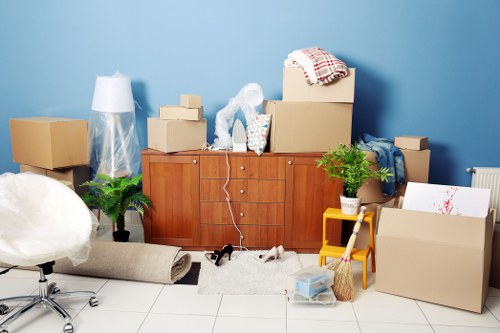
Insurance and Safety for House Removals
House removals and home removals demand rigorous planning, professional training and comprehensive cover. This page explains how our approach to residential removals and moving house operations keeps people and property safe from start to finish. We describe the levels of public liability insurance we maintain, the training standards for removal teams, the personal protective equipment (PPE) used on every job and the step-by-step risk assessment process that underpins every move. Whether the job is small furniture removals or a full house relocation, strong safety controls and insured protection are essential.
Public Liability Insurance: What We Cover
Our public liability insurance protects customers and the public against accidental injury or property damage arising from our moving house services. Policies are maintained at industry-standard limits and are reviewed annually. Public liability cover applies to incidents such as accidental damage to a neighbour's garden wall during a furniture loading operation or a dropped item that causes third-party injury. We ensure all policies include third-party injury, property damage and legal defence costs so that residential removal clients can have peace of mind while their household goods are in transit. Documentation for our insured removal services is available on request prior to a booking. Each move receives confirmation of cover that states policy limits, excess amounts and the scope of cover for both home moving and long-distance house moves. Where additional cover is needed for high-value items, we work with our clients to arrange declared-value options or specialist insurance extensions. Our aim is to make sure that every aspect of the house moving process is appropriately insured and that clients understand how claims would be handled should an unlikely event occur.
Staff Training and Competence
Professional competence is central to safe house removals. All members of the removals team complete structured training that covers manual handling, safe lifting techniques, correct use of moving equipment and secure load restraint. Training records are kept up to date and staff undergo periodic refresher courses. For specialist moves—such as pianos or antique furniture—team members receive additional instruction and supervision to reduce risk and protect the items being moved.
Ongoing Development and Safety Culture
We cultivate a safety-first culture through toolbox talks, competency assessments and performance monitoring. New recruits shadow experienced movers and must demonstrate practical skills before working unsupervised. Driver training for vans and specialised vehicles includes vehicle loading best practice, route planning to avoid hazards and compliance with road safety legislation. Background checks and right-to-work verification are part of our recruitment process, ensuring trustworthy teams handle every home removal assignment.
PPE and Equipment Standards
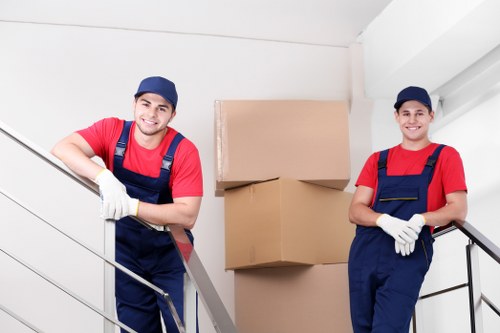
On every job our teams are equipped with the correct personal protective equipment and specialist handling gear. Standard items include:- Gloves for grip and cut protection during furniture handling
- Steel-toe boots and protective footwear to prevent foot injuries
- High-visibility clothing when working near traffic or in low light
- Back braces and lifting aids where appropriate to reduce strain
- Padded blankets, straps and corner protectors for furniture and fragile items
Risk Assessment Process for Every Move
Risk assessment is a formal step that we complete before each home move. A pre-move survey identifies hazards such as narrow staircases, tight doorways, parking constraints, low-hanging cables or fragile flooring. The survey informs a written method statement that clarifies how the team will protect people and property during the house relocation. Residential removal services are planned to minimise manual handling, avoid unnecessary disruption and ensure safe access for vehicles.![The image depicts a minimally furnished room with white walls and light wooden flooring, likely part of a residential property in the UK. In the foreground, there is a neat stack of brown cardboard boxes of various sizes, some sealed with packing tape and others open, placed on a wooden pallet for stability. The boxes appear to contain household belongings and are positioned on the left side of the room, suggesting they are prepared for removal or packing. To the right of the boxes, a window with partially opened blue blinds allows natural daylight to illuminate the space, creating a bright and airy atmosphere. Below the window, a white radiator is mounted against the wall, and a small section of a white skirting board is visible along the base of the wall. The scene gives an impression of a house undergoing a move, with furniture and personal items packed away in cartons, aligning with typical house removals processes in areas like [POSTCODE] or nearby towns. The overall setting emphasizes safety and organization, key considerations for professional removals services such as those offered by House Removals in the UK.](/pub/_photos/removals/f1254572032.jpg) Our risk assessment process follows a consistent sequence: site inspection, hazard identification, risk evaluation, control measures and documentation. Control measures may include temporary floor coverings, use of lifting equipment, additional manpower for heavy items and traffic management for on-street loading. Emergency procedures—including first aid provision, accident reporting and vehicle incident response—are included in the plan so that the team can act quickly if the unexpected happens.
Our risk assessment process follows a consistent sequence: site inspection, hazard identification, risk evaluation, control measures and documentation. Control measures may include temporary floor coverings, use of lifting equipment, additional manpower for heavy items and traffic management for on-street loading. Emergency procedures—including first aid provision, accident reporting and vehicle incident response—are included in the plan so that the team can act quickly if the unexpected happens.
 In addition to on-site checks, we maintain recorded policies on health and safety, insurance certificates and equipment maintenance logs. After each job, teams complete a short review to capture lessons learned and to update procedures where necessary. This continuous improvement loop ensures that our house moving services evolve in line with best practice and regulatory requirements. We take pride in adhering to strong safety standards and comprehensive insurance arrangements so clients can focus on the practical and emotional aspects of moving without undue worry.
Final note: Safe and insured removals rely on clear planning, trained personnel, suitable PPE and robust risk assessments. Whether you are using a local home removals provider or arranging a larger house relocation, insist on documented insurance cover, visible training credentials and a transparent risk assessment process. These elements work together to protect people, property and possessions during every stage of the moving process.