Health and Safety Policy for House Removals and Home Moves
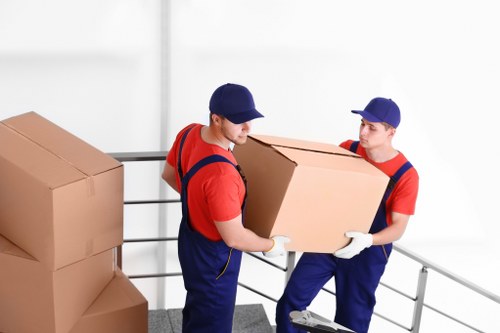 Purpose: This Health and Safety Policy outlines the approach our team applies to safe house removals, domestic moving and residential relocations. It is designed to protect customers, removal crews, drivers and members of the public during any home moving operation. The policy sets out core commitments on risk assessment, training, safe systems of work and continuous improvement. By following these measures for house removals and home relocation tasks we reduce incidents, protect property and ensure efficient, responsible moving services.
Scope: This policy covers all activities associated with house moving, including packing, loading, transport and unloading at the destination. It applies to all staff, subcontractors and volunteers involved in residential removals and related transport tasks. The scope addresses manual handling, use of mechanical aids, vehicle safety, handling of fragile or high-value items and interaction with customers at the origin and destination premises.
 Responsibilities: Management will ensure that clear leadership and resources are available for safe house removals. Crew supervisors must perform pre-job safety briefings and confirm that removal teams understand specific site hazards. Every staff member is responsible for following safe working procedures and reporting hazards or near misses. Contractors engaged for domestic moving work must comply with this safety policy and demonstrate appropriate competence and evidence of suitable training.
Risk Assessment and Safe Systems for Residential Removals
Before undertaking any house removal or residential moving job, a formal risk assessment must be completed. The assessment identifies hazards such as stairs, narrow access routes, low ceilings, parking constraints, pets, and potentially hazardous materials. Controls will be applied in a hierarchy: elimination, substitution, engineering controls (trolleys, ramps, hoists), administrative controls (task rotations, buddy systems) and personal protective equipment (PPE). The outcomes of assessments are recorded and shared with the crew and client where appropriate.
![A woman with dark hair, dressed in a pink t-shirt and blue jeans, is holding a cardboard box on the left side of the image, appearing to pass or receive it. On the right side, a man wearing a blue and green checkered shirt over a white t-shirt is in the process of sealing or preparing a different cardboard box with yellow packaging tape. The background is plain white, and there are additional cardboard boxes stacked nearby, suggesting a packing or moving activity typical of house removals. The scene is well-lit, highlighting the household items and the focus on handling boxes, which relates to professional house removals services offered by companies like House Removals in the UK, particularly in the vicinity of [POSTCODE] or [TOWN]. The environment looks like an indoor space, possibly a living room or hallway, with a focus on the careful handling and preparation of household belongings for relocation.](/pub/_photos/removals/f1236280576.jpg) Training and Competence: All operatives involved in house moving must receive training on manual handling techniques, use of mechanical aids, safe lifting practices, and vehicle-loading methods. Training includes familiarisation with safe packing methods for fragile goods and appliances. Refresher sessions are scheduled periodically, and competence is verified through supervised on-the-job observation. Emphasis is placed on communication skills, teamwork and safe customer interactions during home removals.
Training and Competence: All operatives involved in house moving must receive training on manual handling techniques, use of mechanical aids, safe lifting practices, and vehicle-loading methods. Training includes familiarisation with safe packing methods for fragile goods and appliances. Refresher sessions are scheduled periodically, and competence is verified through supervised on-the-job observation. Emphasis is placed on communication skills, teamwork and safe customer interactions during home removals.
Equipment and PPE: Appropriate moving equipment is provided and maintained for every job. Typical items include moving blankets, straps, trolleys, stair climbers and protective furniture covers. Crew members are required to wear suitable PPE such as gloves, high-visibility clothing and safety footwear during all phases of a house move. Equipment checks are carried out regularly and records kept to confirm maintenance and safety inspections.
Operational Controls for Safe Home Relocations
Safe loading and vehicle procedures form a critical part of domestic removals. Load plans are prepared to ensure secure stowage and safe gross vehicle weights. Drivers and loaders are briefed on axle weights, load restraint and safe driving practices relevant to removals work. When moving heavy items or bulky furniture, teams use agreed lift plans and communicate clearly to avoid strain injuries and damage to property.
![An interior residential setting features a young woman sitting on a cardboard box, holding a clipboard, with a friendly expression. She is dressed in casual clothing, including a light blue hoodie and jeans, and wears a headband. Behind her, there are multiple cardboard boxes of varying sizes, some stacked on the floor and others against a blank cream-colored wall. To the right, a young man is smiling and carrying a large cardboard box, dressed in a light blue shirt with rolled-up sleeves and jeans, with additional moving boxes visible in the background. The environment suggests a house or flat in the process of being packed or prepared for relocation within [TOWN] or nearby, and the scene depicts typical house removal activity with cardboard packaging materials and minimal furnishings present. The lighting is even and natural, emphasizing the practicality and professionalism of [COMPANY_NAME]'s removals service while remaining neutral and factual in tone.](/pub/_photos/removals/f2000404480.jpg) Handling Special Risks: During house removals crews may encounter restricted spaces, fragile antiques, or appliances requiring specific care. Items containing fluids or fuel (lawnmowers, heaters) are identified and managed in accordance with safe handling protocols. Hazardous materials such as paint, aerosols or batteries are excluded from normal removal loads unless suitably packaged and declared; where necessary, specialist disposal or transport arrangements are arranged.
Handling Special Risks: During house removals crews may encounter restricted spaces, fragile antiques, or appliances requiring specific care. Items containing fluids or fuel (lawnmowers, heaters) are identified and managed in accordance with safe handling protocols. Hazardous materials such as paint, aerosols or batteries are excluded from normal removal loads unless suitably packaged and declared; where necessary, specialist disposal or transport arrangements are arranged.
 Incident Reporting, First Aid and Emergency Response: All incidents, including near misses, must be reported promptly and recorded. First aid kits are maintained on site and in vehicles, with trained first-aiders available for home moves. Emergency procedures cover injuries, vehicle breakdowns, fire or other site emergencies. Management will investigate incidents to identify root causes and implement corrective actions to prevent recurrence in future removals.
Monitoring and Continuous Improvement: The effectiveness of this health and safety policy for house removals is monitored through regular audits, crew feedback and review of incident records. Performance indicators include injury rates, near-miss trends and compliance with risk assessment actions. Audits consider vehicle maintenance records, equipment condition and crew training status. Findings are used to update procedures, training content and risk controls for future residential removals.
Record Keeping and Documentation: Accurate records of risk assessments, training, equipment inspections, vehicle checks and incident reports are maintained for each removal job. Documentation supports safe decision-making and provides transparency on how safety was managed during a particular home move. Records are also used to demonstrate continual improvement in health and safety standards across all house-moving activities.
Commitment: We commit to providing a safe working environment for all involved in house removals and residential relocations. This policy is reviewed periodically and revised to reflect operational changes, new equipment or best practice developments. Adherence to these principles helps ensure safe, professional and reliable moves while protecting the wellbeing of crews, clients and the general public.